
Alice Spring imports high-density Lithium Iron Phosphate (LiFePO4) battery energy storage systems (BESS) designed for commercial peak-shaving and backup operations.
Battery Storage Integration
We supply modular, scalable BESS racks starting at 50kWh cabinet solutions up to containerized megawatt systems. We exclusively utilize high-stability Lithium Iron Phosphate (LFP) chemistries which offer excellent thermal stability, long cycle life, and high safety standards under demanding duty cycles.
All battery systems include a built-in battery management system (BMS) that monitors cell voltages, temperatures, and state-of-charge (SoC). The BMS integrates seamlessly with Tier-1 external hybrid inverters via CAN/RS485 interfaces.
BESS Technical Specifications
| Technical Field | LiFePO4 Modular Cabinet Details |
|---|---|
| Cell Chemistry Type | Lithium Iron Phosphate (LiFePO4) |
| Nominal Modular Capacity | 50kWh / 100kWh Scalable Enclosures |
| Recommended C-Rate | 0.5C Charge / Discharge Rate (Continuous) |
| Expected Cycle Life | > 6000 Cycles @ 80% Depth of Discharge (DoD) |
| Communication Interface | Dual CAN / Modbus RS485 BMS Port |
| Thermal Management | Liquid Cooled or Forced-Air Internal HVAC |
Dangerous Goods Transport Warning: Lithium battery shipments exceeding 100Wh are classified as Class 9 Dangerous Goods in Australia. Alice Spring handles all mandatory marine/road dangerous goods declarations, manifesting, and compliant freight routing directly to the buyer's depot.
Works Gallery — Battery Storage Showcase
Lithium-ion battery storage cabinet cells and containers supplied for peak-shaving projects:
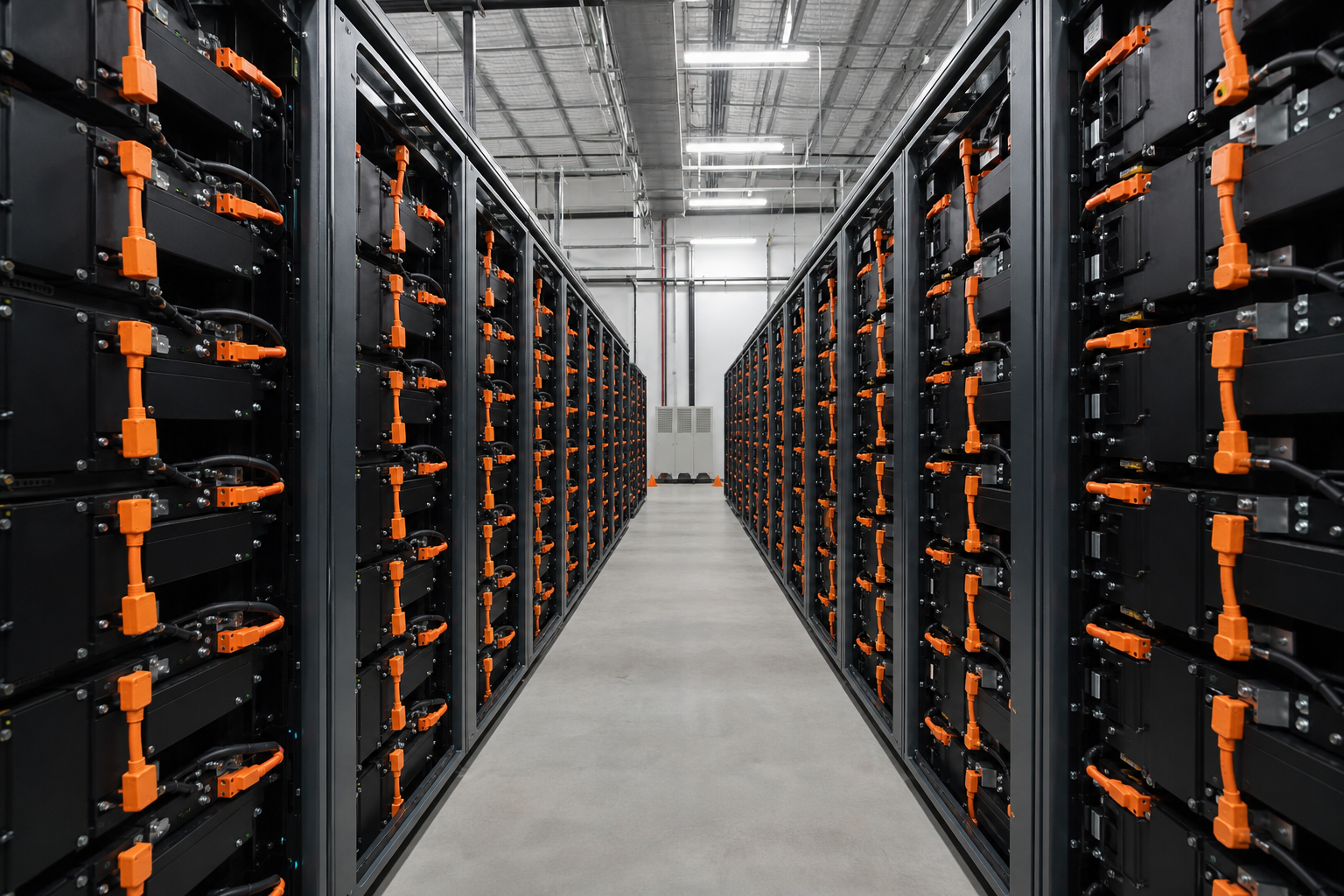
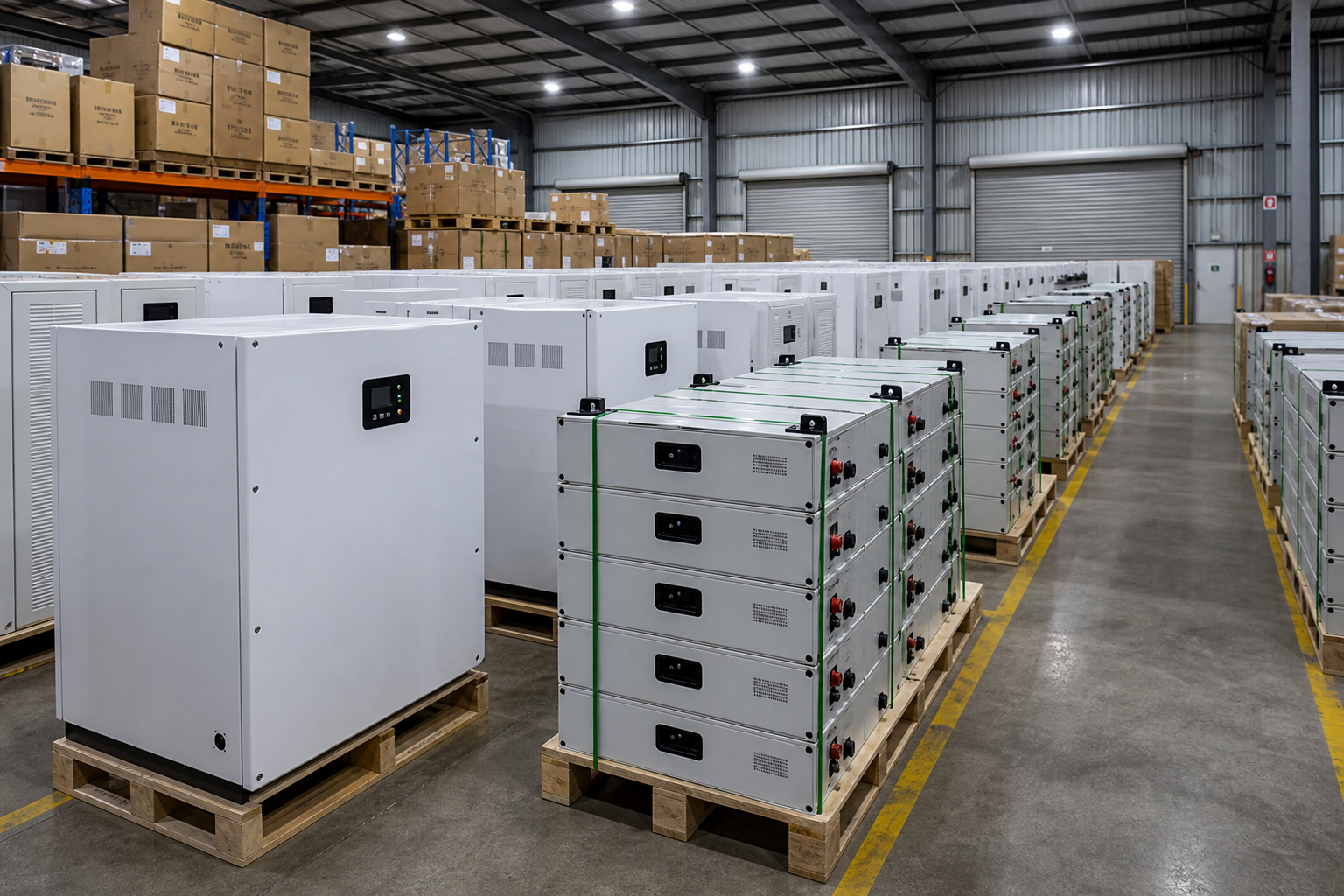
Project Case: Peak-Shaving BESS Array
Supply Scope: 2x 100kWh Modular LiFePO4 Battery Storage Enclosures paired with external liquid cooling management.
Logistics Timeline: Scheduled Dangerous Goods (Class 9) road freight with specialist transport manifests.
Result: Reduced peak demand charges for the commercial facility by 35% under automated BMS scheduling.
Battery Storage & Safety FAQs
Modular cabinets are equipped with aerosol-based fire suppression modules, automated internal pressure relief valves, and continuous cell-level temperature monitoring under standard BMS limits.
Yes. Outdoor enclosures feature IP55 structural ratings, integrated HVAC units for thermal management, and an automated liquid cooling radiator loop designed for Australian desert heat.
Fire safety planning
Commercial storage installations may trigger fire engineering reviews depending on scale and building class. Clients should engage qualified professionals for building-level assessments.