Alice Spring imports high-efficiency monocrystalline silicon solar modules engineered for commercial roof installations and ground-mounted utility arrays.
B2B Procurement Specifications
We source CEC-approved solar modules utilizing advanced N-Type TOPCon and PERC cell technologies, maximizing power density (W/m²) and yielding excellent performance in high temperature environments. All panels are certified to withstand local wind loads (Wind Region C/D compliant) and carry international IEC certifications.
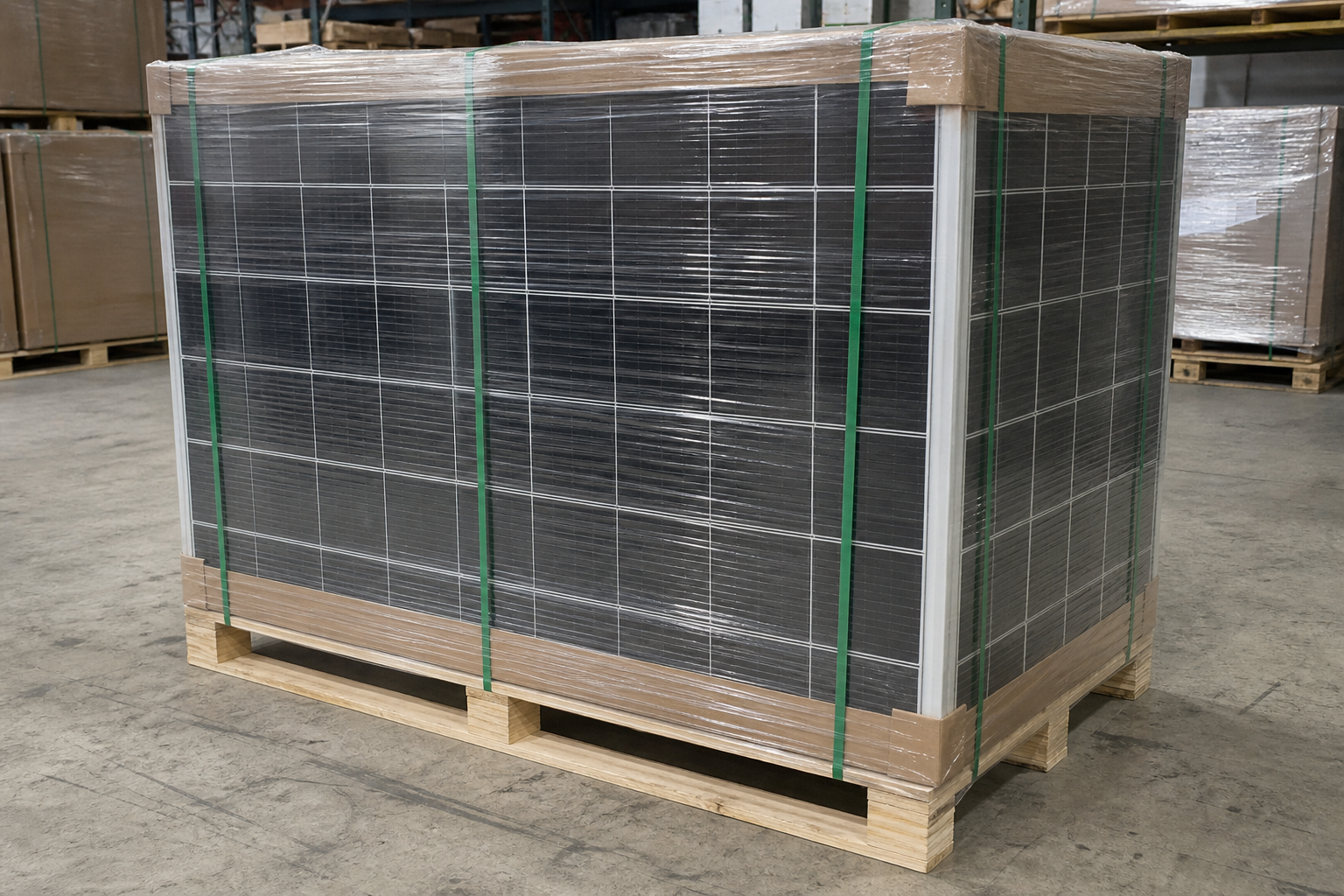
Modules are supplied in heavy-duty palletized packaging designed to survive rough local transport. Receiving sites must be equipped with appropriate heavy forklift unloading capabilities.
Module Technical Parameters
| Technical Parameter | Monocrystalline Monofacial / Bifacial |
|---|---|
| Cell Technology | Monocrystalline N-Type TOPCon |
| Power Output Range | 440W to 585W (CEC Approved Listed) |
| Module Efficiency | 21.8% to 22.6% Peak Efficiency |
| Max System Voltage | 1500V DC (AS/NZS Compliant) |
| Front/Back Load Capacity | 5400 Pa (Snow) / 2400 Pa (Wind) |
| Warranty Channels | 25-Year Linear Power Output Warranty |
Logistics MOQ Notice: Due to shipping packing dimensions and cargo container balance requirements, our standard minimum order quantity for solar modules is 1 full pallet (typically 31 to 36 modules, depending on the model frame size).
Works Gallery — Commercial Solar Module Showcase
A visual record of commercial rooftop projects where Alice Spring successfully supplied the complete solar panel arrays:
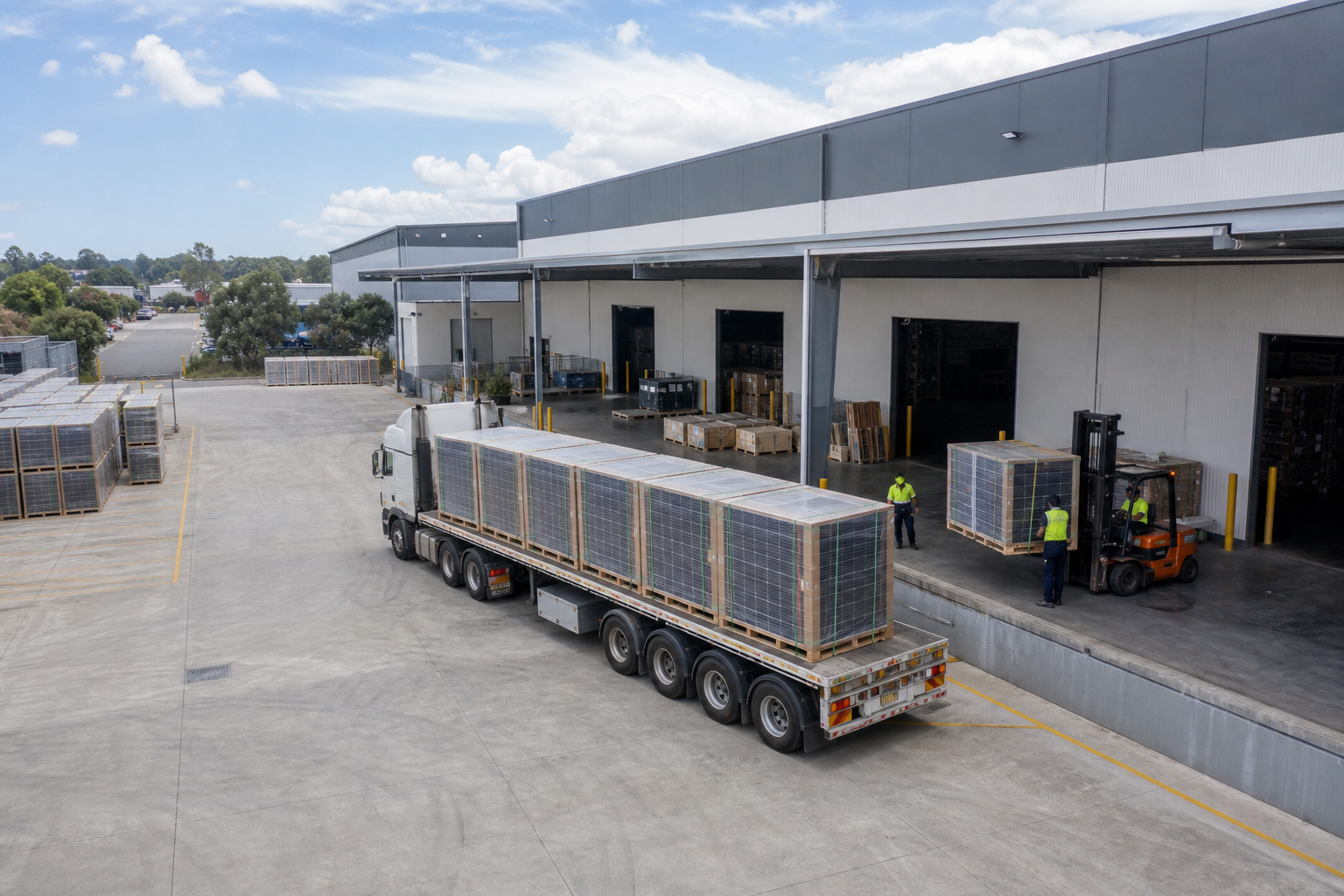
Project Case: 500kW Warehouse Array
Supply Scope: Monocrystalline N-Type TOPCon 550W Panels (15 Pallets)
Logistics Timeline: Scheduled warehouse dispatch over 3 calendar dates directly to site. Tail-lift heavy vehicle scheduled due to loading bay restrictions.
Result: Smooth, structured logistics resulting in immediate project execution by licensed contractors.
Solar Module Technical FAQs
N-Type TOPCon modules feature an extremely low degradation curve: less than 1.0% in year one, and under 0.4% annually from year 2 to 25, guaranteeing long-term energy yield stability.
Yes. All imported modules are certified under IEC 61701 (Salt Mist Corrosion Resistance) and IEC 62716 (Ammonia Corrosion Resistance), making them suitable for coastal and agricultural arrays.
Degradation and performance claims
Manufacturer datasheets state performance warranties and degradation curves. System-level yield depends on design, installation quality, and site conditions — not supply alone.
Packaging and site storage
Modules should remain in appropriate packaging until installation to reduce damage risk. Site storage should avoid standing water, impact hazards, and unauthorized access.
Recycling pathways
End-of-life module management is an industry-wide consideration. Clients should plan decommissioning responsibilities in commercial project contracts.